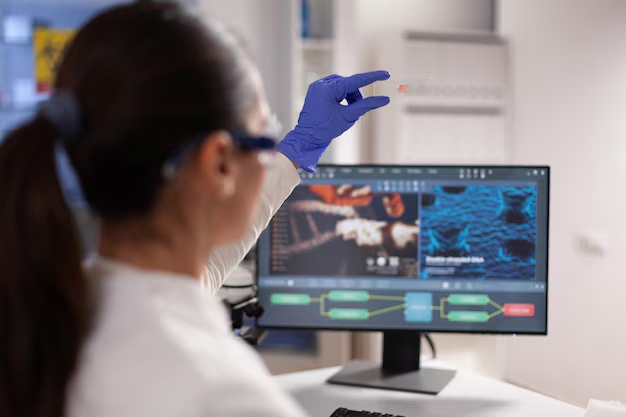
Global Live Cell Imaging Market Overview
The global live cell imaging market is poised for steady growth, with an expected compound annual growth rate (CAGR) of approximately 8–9% from 2024 to 2029. This growth is driven by the increasing demand for real-time cellular analysis across a wide range of applications, including biomedical research, drug development, and personalized medicine. As the life sciences industry continues to evolve, researchers are placing greater emphasis on understanding dynamic cellular processes in real time, which has significantly boosted the adoption of live cell imaging technologies.
Advancements in high-resolution and super-resolution imaging techniques, along with the integration of artificial intelligence (AI) for image analysis, are transforming the capabilities of live cell imaging systems. These innovations enable researchers to observe cellular interactions, track biological changes, and study disease mechanisms with unprecedented precision and minimal invasiveness. Furthermore, the growing use of live cell imaging in fields such as regenerative medicine, immunology, and oncology is expanding the scope and importance of this technology.
Download pdf Brochure: https://meditechinsights.com/global-live-cell-imaging-market/request-sample/
Importance of Live Cell Imaging in Drug Development and Research
Live cell imaging plays a critical role in modern drug discovery and biomedical research by enabling scientists to observe cellular behavior as it occurs. Unlike traditional imaging techniques that rely on fixed or dead cells, live cell imaging provides real-time insights into cellular functions, interactions, and responses to external stimuli.
This capability is particularly valuable in drug development, where understanding how potential therapeutic compounds interact with living cells is essential. Researchers can evaluate drug efficacy, toxicity, and mechanisms of action early in the development process, helping to identify promising candidates and eliminate ineffective ones. This not only accelerates preclinical testing but also reduces the overall cost and risk associated with drug development.
By allowing continuous monitoring of cellular responses, live cell imaging improves the accuracy of experimental outcomes and enhances the likelihood of success in subsequent clinical trials. As a result, it has become an indispensable tool for pharmaceutical and biotechnology companies seeking to bring safer and more effective therapies to market.
Rising Demand in Cancer Research
Cancer research represents one of the most significant application areas for live cell imaging, driving substantial market growth. The technology enables researchers to monitor tumor development, metastasis, and cellular responses to therapeutic interventions in real time. This level of insight is critical for understanding cancer progression and developing targeted treatment strategies.
The increasing global burden of cancer has further intensified the demand for advanced research tools. For instance, in 2023, the United States reported approximately 1.9 million new cancer cases and over 609,000 cancer-related deaths, highlighting the urgent need for innovative research solutions. Funding initiatives such as the Cancer Moonshot program have also accelerated research efforts, supporting the adoption of cutting-edge imaging technologies.
High-resolution fluorescence microscopy and automated imaging systems have significantly improved the speed and accuracy of cancer studies. These tools enable researchers to analyze cellular behavior at a granular level, facilitating breakthroughs in early detection, drug development, and personalized treatment approaches.
Technological Advancements Driving Market Growth
Technological innovation is a key factor shaping the live cell imaging market. Advanced imaging techniques such as multi-photon microscopy, confocal microscopy, and super-resolution imaging have revolutionized the ability to visualize cellular structures and processes at the molecular level.
The integration of environmental control systems within imaging platforms allows researchers to maintain optimal conditions for live cells during long-term experiments. This enables continuous observation without compromising cell viability, providing more reliable and meaningful data.
Automation is another major advancement, with modern imaging systems offering high-throughput capabilities and reduced manual intervention. Automated workflows enhance reproducibility, minimize human error, and allow researchers to conduct large-scale experiments more efficiently.
Additionally, AI-driven analytics are transforming data interpretation by enabling real-time image processing, cell tracking, and pattern recognition. These technologies enhance the accuracy and speed of analysis, making it easier to extract actionable insights from complex datasets.
Challenges in the Live Cell Imaging Market
Despite its significant advantages, the live cell imaging market faces several challenges that may limit its growth. One of the primary barriers is the high cost associated with advanced imaging systems. Entry-level systems typically range from $20,000 to $50,000, while more sophisticated platforms equipped with multi-laser confocal technology and high-throughput capabilities can cost between $100,000 and $400,000.
Such high costs can be prohibitive for smaller research institutions, academic laboratories, and organizations in emerging markets with limited budgets. In addition to the initial investment, ongoing maintenance and operational costs further add to the financial burden.
Another challenge is the complexity of operating live cell imaging systems. These technologies require specialized skills and training, which may not be readily available in all research settings. The need for skilled personnel can slow adoption and limit the effective utilization of these systems.
Applications Beyond Cancer Research
While cancer research remains a major driver, live cell imaging is increasingly being applied across a broad range of scientific disciplines. In regenerative medicine, the technology is used to study tissue development and repair processes, providing insights into cell growth and differentiation.
In immunology, live cell imaging helps researchers understand immune cell interactions and responses to pathogens. This is particularly important for developing vaccines and immunotherapies. Similarly, in neuroscience, the technology enables the study of neuronal activity and connectivity, contributing to advancements in understanding brain function and neurological disorders.
Stem cell research also benefits significantly from live cell imaging, as it allows scientists to monitor differentiation pathways and optimize conditions for therapeutic applications. Additionally, the study of pathogen-host interactions using live cell imaging supports rapid responses to emerging infectious diseases, making it a valuable tool in global health research.
Emerging Trends in Live Cell Imaging
Several emerging trends are shaping the future of the live cell imaging market. The integration of AI and machine learning is revolutionizing image acquisition and analysis, enabling automated workflows and more precise data interpretation. These technologies allow researchers to detect subtle cellular changes that may not be visible through manual observation.
Multiplex imaging is another important trend, allowing the simultaneous visualization of multiple cellular components using different fluorescent markers. This enhances the depth and richness of data, enabling more comprehensive studies of complex biological systems.
Miniaturization and portability of imaging systems are also gaining traction, making live cell imaging more accessible outside traditional laboratory settings. Portable devices enable point-of-care research and field-based studies, expanding the reach of this technology.
Competitive Landscape
The global live cell imaging market is characterized by the presence of several prominent players who are actively investing in research and development, technological innovation, and strategic partnerships. These companies focus on enhancing imaging capabilities, improving software solutions, and expanding their product portfolios to meet evolving research needs.
The competitive environment fosters continuous innovation, leading to advancements in both imaging hardware and analytical software. Companies are also expanding their global presence to tap into emerging markets and capitalize on growing demand.
Key Players
Danaher Corporation
Carl Zeiss AG
Agilent Technologies
Olympus Corporation
Thermo Fisher Scientific
PerkinElmer
Bruker Corporation
Nikon Corporation
Merck KGaA
Sartorius AG
These organizations are at the forefront of innovation, driving advancements in live cell imaging technologies and strengthening their positions in the global market.
Market Drivers
The growth of the live cell imaging market is supported by several key drivers, including the increasing demand for real-time cellular analysis in drug development, the rising prevalence of cancer, and growing investments in oncology research. The need for advanced therapeutic solutions for chronic diseases and continuous advancements in imaging technologies further contribute to market expansion.
Market Restraints
Despite strong growth potential, the market faces challenges such as the high cost of imaging systems, the requirement for specialized skills and training, and limited access to advanced technologies in developing regions.
Market Segmentation
The live cell imaging market can be segmented based on product type, application, and geography. Product categories include fluorescence microscopy, confocal microscopy, multi-photon microscopy, and related consumables. Applications span drug discovery, cancer research, regenerative medicine, immunology, and pathogen studies.
Geographically, North America and Europe currently lead the market due to well-established research infrastructure and high investment levels. However, emerging regions are expected to witness significant growth as healthcare and research capabilities expand.
Future Outlook
The future of the live cell imaging market looks promising, with continued growth expected as more research institutions and healthcare organizations adopt these technologies. Advances in automation, AI integration, and imaging resolution will further enhance the capabilities and accessibility of live cell imaging systems.
As costs gradually decrease and awareness increases, adoption is likely to expand across emerging markets. With its ability to provide real-time insights into cellular behavior and treatment responses, live cell imaging is set to become an essential tool in modern biomedical research, driving innovation and improving healthcare outcomes worldwide.
Key Request a free sample copy or view report summary: https://meditechinsights.com/global-live-cell-imaging-market/request-sample/
About Medi-Tech Insights
Medi-Tech Insights is a healthcare-focused business research & insights firm. Our clients include Fortune 500 companies, blue-chip investors & hyper-growth start-ups. We have completed 100+ projects in Digital Health, Healthcare IT, Medical Technology, Medical Devices & Pharma Services in the areas of market assessments, due diligence, competitive intelligence, market sizing and forecasting, pricing analysis & go-to-market strategy. Our methodology includes rigorous secondary research combined with deep-dive interviews with industry-leading CXO, VPs, and key demand/supply side decision-makers.