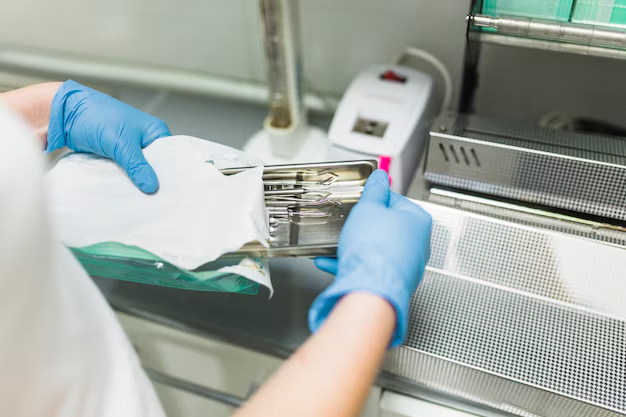
Global Medical Device Cleaning Market Overview
The global medical device cleaning market is experiencing steady and sustained growth, projected to expand at a CAGR of nearly 7–9% over the forecast period. This growth is largely driven by increasing awareness regarding infection prevention, a rising number of surgical and diagnostic procedures, and the expanding use of reusable medical devices across healthcare settings. Hospitals, outpatient care centers, specialty clinics, and diagnostic laboratories are placing greater emphasis on stringent cleaning and reprocessing protocols to reduce the risk of healthcare-associated infections (HAIs).
With patient safety becoming a critical priority and regulatory frameworks becoming more stringent worldwide, the demand for efficient and reliable medical device cleaning solutions has grown significantly. Products such as detergents, disinfectants, enzymatic cleaners, and automated reprocessing systems play a vital role in maintaining hygiene standards and ensuring compliance with global healthcare regulations. Additionally, the growing need for operational efficiency in healthcare facilities is further accelerating the adoption of advanced cleaning technologies.
Download pdf Brochure: https://meditechinsights.com/medical-device-cleaning-market/request-sample/
Market Dynamics and Growth Fundamentals
The rapid increase in the use of complex medical devices has created a strong need for advanced cleaning methodologies. Devices with intricate designs, narrow lumens, and delicate components require specialized cleaning solutions to ensure complete removal of contaminants. As healthcare providers aim to improve clinical outcomes and reduce infection risks, the demand for high-performance cleaning products and systems has risen substantially.
Technological advancements have played a key role in transforming cleaning practices. Enzymatic detergents, ultrasonic cleaners, automated washers, and robotics-based systems are increasingly being used to enhance cleaning accuracy and efficiency. Medical devices such as endoscopes, minimally invasive surgical instruments, and orthopedic tools require meticulous cleaning processes, making advanced reprocessing systems indispensable in modern healthcare environments.
Healthcare institutions are also focusing on improving consistency and standardization in cleaning procedures. This has led to the adoption of automated systems capable of delivering repeatable and validated cleaning outcomes, thereby reducing variability and enhancing overall quality assurance.
Increasing Focus on Infection Prevention and Control
One of the most significant drivers of the medical device cleaning market is the growing emphasis on infection prevention and control. Healthcare-associated infections continue to pose a major challenge globally, leading to prolonged hospital stays, increased healthcare costs, and higher patient morbidity.
Regulatory authorities and accreditation bodies have implemented strict guidelines to ensure proper cleaning and disinfection of medical devices. Healthcare providers are required to adopt validated cleaning protocols that effectively reduce microbial contamination and ensure patient safety. As a result, there is a strong shift toward investing in advanced cleaning technologies that offer automation, traceability, and compliance with established standards.
The heightened awareness following global health crises has further reinforced the importance of hygiene and sterilization practices. Healthcare facilities are now prioritizing the adoption of best-in-class cleaning solutions to maintain safe environments for both patients and healthcare professionals.
Technology Adoption and the Rise of Automated Cleaning Systems
Automation is playing an increasingly important role in the medical device cleaning market. Automated cleaning systems minimize human intervention, thereby reducing the likelihood of errors and inconsistencies during the reprocessing of medical devices. These systems offer standardized cleaning cycles, real-time monitoring, and improved efficiency, making them highly valuable for healthcare facilities.
Robotics and advanced sensor technologies are also being integrated into cleaning systems to enhance precision and reliability. Robotic cleaning solutions are particularly beneficial for handling complex and delicate instruments, ensuring thorough cleaning without causing damage.
As healthcare institutions continue to embrace digital transformation, automated and robotics-driven cleaning systems are becoming essential components of modern healthcare infrastructure. These technologies not only improve operational efficiency but also support compliance with regulatory requirements and quality standards.
Sustainability and Eco-Friendly Cleaning Preferences
Sustainability has emerged as a key trend influencing the development of medical device cleaning solutions. Healthcare organizations are increasingly seeking products that deliver effective cleaning while minimizing environmental impact. This has led to the introduction of biodegradable detergents, low-toxicity disinfectants, and energy-efficient cleaning systems.
Manufacturers are focusing on developing eco-friendly formulations that reduce chemical waste and environmental hazards without compromising performance. Regulatory bodies are also encouraging the adoption of green practices, prompting healthcare providers to integrate sustainability into their procurement strategies.
As environmental concerns continue to grow, the demand for sustainable cleaning solutions is expected to rise, creating new opportunities for innovation and differentiation in the market.
Compatibility Challenges and Cost Constraints
Despite the positive growth outlook, the medical device cleaning market faces certain challenges. Advanced cleaning systems often involve high initial investment and maintenance costs, which can limit their adoption, particularly in developing regions with constrained healthcare budgets.
Another critical challenge is ensuring compatibility between cleaning agents and various medical device materials. Some chemical formulations may cause damage to sensitive instruments, while certain devices require specialized cleaning solutions. This complexity necessitates careful selection of cleaning products and adherence to manufacturer guidelines.
Additionally, the need for skilled personnel to operate advanced cleaning systems and maintain compliance with protocols remains a concern. Training requirements and workforce limitations can pose challenges, especially in high-volume healthcare settings.
Competitive Landscape Analysis
The global medical device cleaning market is highly competitive, with the presence of both established multinational corporations and emerging players offering specialized solutions. Companies are focusing on expanding their product portfolios, investing in research and development, and forming strategic collaborations to strengthen their market position.
Partnerships with medical device manufacturers are becoming increasingly common, enabling companies to develop cleaning solutions that are specifically designed for compatibility with advanced medical instruments. Mergers, acquisitions, and geographic expansions are also key strategies adopted by market players to enhance their global footprint.
Innovation remains a critical factor in maintaining competitiveness. Companies are prioritizing the development of automated systems, eco-friendly products, and customized solutions to meet the evolving needs of healthcare providers.
Key Market Growth Drivers
- Growing demand for infection prevention and control across healthcare settings
- Increasing volume of surgical and outpatient procedures worldwide
- Stringent regulatory standards governing medical device reprocessing
- Rising awareness of healthcare-associated infections and their impact
- Continuous technological advancements in cleaning and automation systems
Attractive Market Opportunities
- Rising demand for modular and customizable cleaning solutions
- Expanding healthcare infrastructure in developing regions
- Increasing adoption of robotic and AI-driven cleaning technologies
- Growing shift toward eco-friendly and biodegradable cleaning formulations
Key Players in the Medical Device Cleaning Market
Steris plc
Getinge AB
Advanced Sterilization Products
The Ruhof Corporation
Sklar Surgical Instruments
Sterigenics International LLC
Metrex Research, LLC
Oro Clean Chemie AG
Cantel Medical Corporation
Ecolab
3M
These companies are actively investing in innovation, expanding their product offerings, and strengthening their global presence to capitalize on market opportunities.
Conclusion
The global medical device cleaning market is poised for strong growth as healthcare systems worldwide continue to prioritize patient safety, infection control, and regulatory compliance. The increasing adoption of advanced technologies, including automation and robotics, is transforming cleaning processes and enhancing efficiency.
While challenges such as cost constraints, compatibility issues, and workforce requirements persist, the market’s growth remains supported by rising healthcare demand, technological innovation, and sustainability trends. As healthcare providers strive to deliver high-quality care in safe and hygienic environments, the role of effective medical device cleaning solutions will continue to be indispensable.
Key Request a free sample copy or view report summary: https://meditechinsights.com/medical-device-cleaning-market/request-sample/
About Medi-Tech Insights
Medi-Tech Insights is a healthcare-focused business research & insights firm. Our clients include Fortune 500 companies, blue-chip investors & hyper-growth start-ups. We have completed 100+ projects in Digital Health, Healthcare IT, Medical Technology, Medical Devices & Pharma Services in the areas of market assessments, due diligence, competitive intelligence, market sizing and forecasting, pricing analysis & go-to-market strategy. Our methodology includes rigorous secondary research combined with deep-dive interviews with industry-leading CXO, VPs, and key demand/supply side decision-makers.